


Newsletter Subscribe
Enter your email address below and subscribe to our newsletter

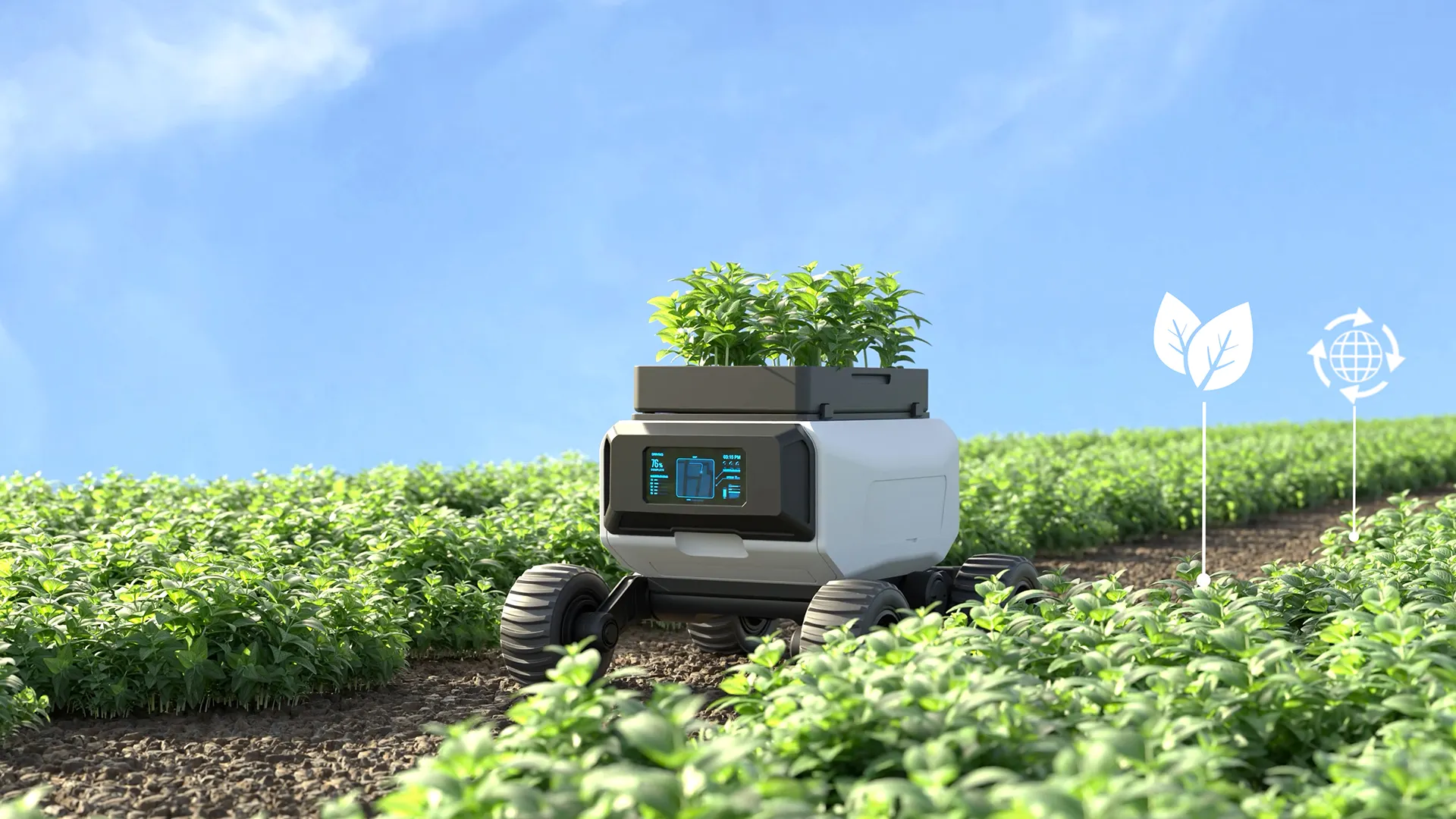
AI in agriculture is revolutionizing how we farm by providing valuable insights and automating essential tasks. From predicting crop yields to optimizing irrigation and detecting diseases early, AI is making farming more efficient and sustainable.
This article delves into how AI technologies are transforming various aspects of agriculture, including precision farming, crop health, livestock management, and more.
Artificial intelligence is at the forefront of transforming modern agriculture, enabling farmers to make data-driven decisions that enhance crop yield and reduce costs. Integrating AI into farming practices enhances efficiency while promoting sustainability and regenerative agriculture. AI-powered predictive analytics allows farmers to process data more efficiently, leading to better operational decision-making and increased productivity.
The agriculture market is witnessing a significant shift towards digital agriculture, with the AI in agriculture market forecasted to grow from USD 1.7 billion in 2023 to USD 4.7 billion by 2028. This growth highlights the increasing reliance on advanced technologies and AI tools in the agriculture industry. From AI algorithms that facilitate precise herbicide application to machine learning models that predict crop yields, AI is empowering farmers and transforming agricultural systems.
Smart farming technologies are also enabling farmers to reduce herbicide use, improve harvest quality, and achieve higher profits. Automating repetitive tasks with AI enables farmers to concentrate on strategic decisions, enhancing overall farm management. It’s clear that AI is not just a tool but a critical component in the evolution of sustainable agriculture and modern farming practices.
Precision agriculture leverages the power of artificial intelligence to tailor farming practices to specific field conditions, thereby enhancing both yield and sustainability. Utilizing real-time data collection and machine learning helps farmers optimize seed placement, monitor soil moisture, and predict the effects of seasonal weather changes on crop yield. This level of precision was unimaginable in traditional farming but is now a reality thanks to AI technologies.
One of the key benefits of AI in precision agriculture is the ability to provide farmers with precise herbicide application, leading to a 12% rise in productivity. However, the agricultural sector faces challenges such as data fragmentation and ownership issues, which can hinder the full potential of AI-driven insights. Unlike the finance sector, agriculture lacks a centralized data system, making it difficult to leverage collective knowledge.
Despite these challenges, AI systems are making strides in enhancing irrigation practices by analyzing soil moisture levels and weather conditions. This ensures efficient water usage and maintains crop health, further contributing to sustainable farming practices. Precision agriculture, powered by AI, is not just about increasing crop yields but also about promoting sustainable and regenerative agriculture practices.
AI systems are revolutionizing crop health and disease management by utilizing data from cameras and sensors to predict disease outbreaks before they become widespread.
Machine learning models and ai models can identify plant diseases early, leading to timely interventions that result in a 20% decrease in disease occurrence. This proactive approach is a game-changer for modern agriculture, enabling farmers to maintain healthy crops, improve overall crop yields, and enhance soil health.
Several AI tools and applications are making significant strides in disease management. For instance, the Plantix app allows users to diagnose plant diseases instantly by uploading photos of affected crops. Similarly, FlyPix AI uses aerial and satellite images to monitor crop health and detect diseases early. These smart farming technologies are not only enhancing crop management but also supporting farmers in managing risks and optimizing resource use.
AI technology also aids in detecting crop diseases and pests, providing early warnings that can prevent extensive damage. Tools like the Tumaini app for banana farmers and ProAg’s Inference tool, which integrates weather data for enhanced accuracy, are examples of how AI is empowering farmers. Leveraging AI ensures better crop performance and contributes to sustainable agricultural systems.
Smart irrigation systems powered by AI are a cornerstone of sustainable agriculture. These automated systems:
The integration of AI development in irrigation systems can lead to a reduction in water usage by up to 25%, making it a vital tool in regions facing extreme weather conditions and water scarcity due to climate change. Soil moisture sensors in AI-driven systems determine when irrigation is necessary, further enhancing water efficiency. Such solutions not only contribute to sustainable farming practices but also improve crop yields by ensuring that plants receive the right amount of water at the right time.
Predictive analytics in AI also plays a crucial role in forecasting weather forecasting and irrigation needs, enhancing the overall efficiency of irrigation systems. By leveraging AI systems and smart sensors, farmers can practice precision agriculture and ensure that their irrigation practices are aligned with the needs of their specific crops and soil conditions.
Automated harvesting and weeding are yet another testament to how AI is transforming modern agriculture. AI technologies are enhancing the speed and efficiency of harvesting crops and weed elimination, addressing the challenges of labor shortages that many farmers face. These advanced technologies are not only improving productivity but also reducing the need for manual labor, allowing farmers to focus on more strategic aspects of farm management.
AI-driven machines can distinguish between crops and weeds, applying herbicides only where weeds are detected, leading to a 40% reduction in herbicide usage. This precise herbicide application is a significant improvement over traditional methods, promoting sustainable farming practices and reducing environmental impact through digital technology and ecosystem services.
Robots equipped with AI can perform automatic weeding and harvesting continuously, maximizing productivity and ensuring that crops are harvested at the optimal time.
Sophisticated AI-powered machines designed to identify and eradicate weeds are making farming practices more efficient and effective. Integrating AI into agricultural practices results in better crop health and higher yields, contributing to the overall sustainability of agricultural production.
AI is also making significant strides in livestock health monitoring, using:
These AI technologies enable early disease detection and provide insights for feeding management, thereby improving animal welfare and boosting milk production.
By detecting atypical behavior and activities such as birthing, AI informs farmers of livestock conditions, allowing for timely interventions and better management of livestock health. This not only enhances the economic benefits for farmers but also contributes to sustainable agriculture practices.
AI-driven tools also predict optimal breeding times based on behavioral patterns, further enhancing the management of livestock health. Leveraging AI technology ensures livestock health and productivity, contributing to the overall efficiency and sustainability of modern agriculture.
Predictive analytics is a key application of AI in agriculture, allowing farmers to optimize crop yields by analyzing historical data and environmental conditions.
AI technologies can forecast crop output, significantly reducing post-harvest losses and enabling better planning for sowing seeds and resource allocation. This proactive approach transforms reactive practices into proactive management, enhancing overall farm management.
Using predictive performance analytics allows farmers to:
Farmers gain better planning for sowing seeds and resource allocation through the analyzing data of patterns in crop yield data.
This not only improves crop yields but also contributes to sustainable agriculture by ensuring that natural resources are used efficiently and effectively, promoting crop growth, food production, and key principles of resource scarcity management.
AI is enhancing supply chain efficiency in agriculture by:
AI also simplifies complex supply chain processes, enabling farmers to lower costs and improve efficiency. By leveraging AI tools and solutions, farmers can ensure that their agricultural production aligns with market demands, reducing waste and maximizing profits.
The adoption of AI in agriculture comes with its own set of challenges. High initial costs and financial struggles can deter small-scale farmers from implementing AI technologies.
Additionally, many farmers lack practical experience with new technologies and resist innovation due to this lack of understanding. To overcome these challenges, training and education for farmers on AI applications are crucial.
Technology companies need to provide ongoing support and training for farmers and agricultural businesses to ensure successful adoption and implementation of AI in agriculture and technology development. Addressing data privacy issues through methods like anonymization and aggregation is also essential to gain farmers’ trust and ensure the ethical use of AI.
Supportive policies at local, national, and international levels are necessary to bridge the ‘AI divide’ and ensure that smallholder farmers have access to AI technologies.
Addressing these global challenges and providing solutions ensures that AI reaches its full potential in transforming agricultural practices and promoting sustainable agriculture to support farmers.
The future of AI in sustainable agriculture is promising, with AI expected to revolutionize farming by improving efficiency, sustainability, and real-time monitoring of agricultural practices. AI-driven farming tools are anticipated to enable farmers to shift from manual tasks to strategic planning and oversight of smart systems. This shift will not only enhance farm management but also promote sustainable practices and reduce the environmental impact of farming.
The market for AI in agriculture is projected to grow substantially, indicating a rising reliance on technology in farming practices. Supportive policies at local and national levels are crucial.
They are also necessary at the international level for digital technologies and AI to achieve their full potential in regenerative agriculture. Embracing AI ensures a sustainable future for agriculture and helps continue to feed the growing global population within the food system.
In summary, artificial intelligence is transforming modern agriculture in numerous ways, from precision agriculture and smart irrigation systems to automated harvesting and livestock health monitoring.
By leveraging AI technologies, farmers can enhance crop yields, reduce costs, and promote sustainable farming practices. The challenges of AI adoption can be overcome through training, support, and supportive policies, ensuring that AI reaches its full potential in transforming agricultural practices.
As we look to the future, the role of AI in sustainable agriculture will only continue to grow. By embracing AI, farmers can achieve greater efficiency, sustainability, and resilience in their farming practices. The future of agriculture is bright, and AI will play a crucial role in ensuring that we can feed the growing global population while promoting environmental sustainability.
AI is transforming modern agriculture by enabling data-driven decisions that enhance crop yield, reduce costs, and promote sustainability. This technology is revolutionizing farming practices through advanced data analysis and improved decision-making processes.
Precision agriculture is a farming approach that employs real-time data and machine learning to customize agricultural practices based on specific field conditions, ultimately enhancing resource efficiency and crop yields.
AI enhances crop health and disease management by utilizing data from cameras and sensors to predict disease outbreaks, allowing for timely interventions. Tools such as Plantix and FlyPix AI facilitate accurate disease diagnosis and ongoing monitoring.
Smart irrigation systems significantly enhance water efficiency by leveraging AI to analyze weather conditions and soil moisture, resulting in decreased water waste and increased crop yields. Implementing such systems is a strategic advantage for sustainable agricultural practices.
Farmers face significant challenges in adopting AI technologies, including high initial costs, limited experience, and data privacy concerns. Addressing these issues through training and supportive policies is essential for successful integration.